Emergency Fund 101: Your First $1,000, Then 3 Months
Updated November 2026: guide reviewed and reformatted.
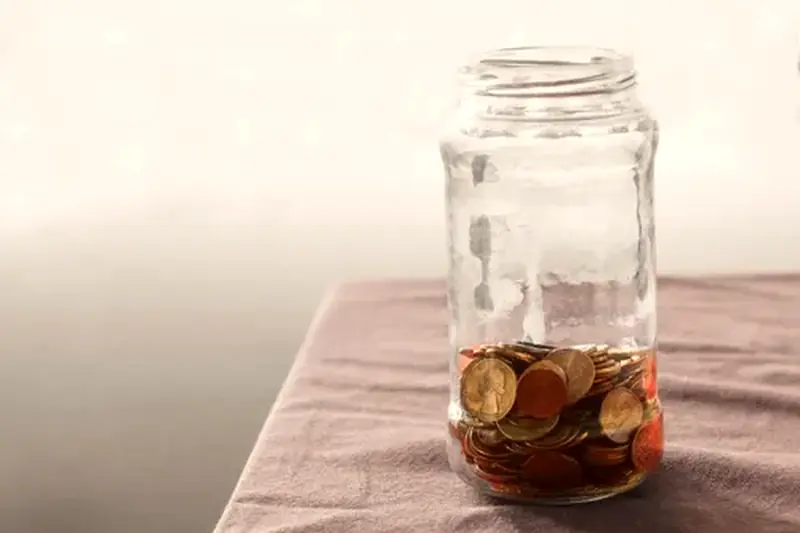
An emergency fund is boring, and it is the highest-return "investment" a beginner can make — because it stops emergencies from going on a 24% APR credit card. And if you are starting with no credit history at all, building a credit score from zero is the honest, no-hacks way to fix that.
On this page
The two stages
- Stage 1: $1,000 starter fund. Covers the classic emergencies: car repair, phone screen, a cut shift.
- Stage 2: 3 months of essential expenses (rent, food, bills — not your full salary). Freelancers and single-income homes: aim for 6.
Where to keep it
A high-yield savings account at a bank different from your everyday one — same-week access, but not same-minute temptation. Not invested: the market dropping is exactly when jobs vanish.
How to build it on a tight income
Automate a fixed transfer on payday, even $25. Add windfalls: tax refunds, sold items, overtime. Our first-$100 guide pairs well with this — fast-path income seeds the fund, the fund protects everything else.
A worked example: building the fund on $2,600 a month
Meet a realistic starter case: take-home pay of $2,600 a month, with essential expenses — rent, groceries, utilities, transport, minimum payments — of $1,900. Stage 1 is the $1,000 starter fund. Saving $50 a week reaches it in 20 weeks, about five months. That first $1,000 covers the classic emergencies: a $420 car repair, a $180 phone screen, a week of cut shifts.
Stage 2 is three months of essentials: 3 × $1,900 = $5,700. Continuing at $200 a month — the same $50 a week — gets there in roughly 24 more months after Stage 1. That sounds slow, and it is. It is also how most real funds get built: boring automatic transfers, plus windfalls. Send half of a $900 tax refund to the fund and the Stage 2 timeline drops by more than two months. Our $500 starter fund guide breaks the very first milestone into a week-by-week plan if $1,000 feels far away.
The two stages, side by side
| Stage 1: Starter fund | Stage 2: Full cushion | |
|---|---|---|
| Target | $1,000 flat | 3 months of essential expenses (6 for freelancers) |
| Covers | Car repair, phone screen, small medical bill, one cut week | Job loss, a move, a major repair — without touching credit cards |
| Where it lives | High-yield savings account | Same account — keep it simple |
| Typical timeline | 3–6 months at $50/week | 1–3 years of steady transfers plus windfalls |
Frequently asked questions
Should I build the fund or pay off credit card debt first?
Both, in a specific order: build the $1,000 starter fund first, then attack high-interest debt, then finish Stage 2. Without the starter fund, the next emergency goes straight back on the card at 24% APR and erases your payoff progress. With it, debt payments stop getting interrupted.
Where exactly should I keep the money?
In a high-yield savings account at a different bank from your everyday checking — same-week access, but not same-minute temptation. Our high-yield savings account guide explains what rates to expect and what to check before opening one. Do not invest the fund: the stock market dropping is exactly when jobs disappear, and you may need the cash at the worst moment.
What actually counts as an emergency?
A simple test: is it necessary, unexpected, and urgent? A transmission failure passes all three. A concert ticket fails two. A predictable expense — car insurance due every six months — is not an emergency at all; it belongs in your monthly budget as a small sinking fund, so it never raids the real fund.
Where you keep the fund matters almost as much as building it: for money with a known future date a CD can pay a little more, but emergency money needs penalty-free access — our CD vs high-yield savings account comparison shows the November 2026 rate gap on $5,000 and explains why the emergency fund itself stays in savings.
Get the free Budget Planner
One short, honest email a week with the newest guides and tools — plus the printable Budget Planner (a 50/30/20 worksheet and a 4-week spending tracker) as a welcome gift. No spam, unsubscribe anytime.
You’re in! Thanks for joining — your first email lands this week.
Your planner is ready — download it here