3 Digital Products a Beginner Can Make in a Weekend (With AI, Ethically)
Yes, a beginner can genuinely finish a sellable digital product in one weekend — if the product is small, solves one painful problem, and is built with AI as an assistant rather than a substitute for judgment. This guide gives you three proven formats: a printable planner or journal, a niche template pack, and a short practical guide or ebook. For each one you get what it is, the exact weekend build steps, where it sells, and honest starter pricing in the $7–$29 range most first products actually occupy. It also draws the ethics line plainly, because it decides whether your weekend product becomes an asset or a refund magnet: AI-assisted is fine; AI-generated-and-unedited is low-value content that buyers refund, report, and review accordingly. Build with that line in view and a weekend is enough.
Product 1: A printable planner or journal
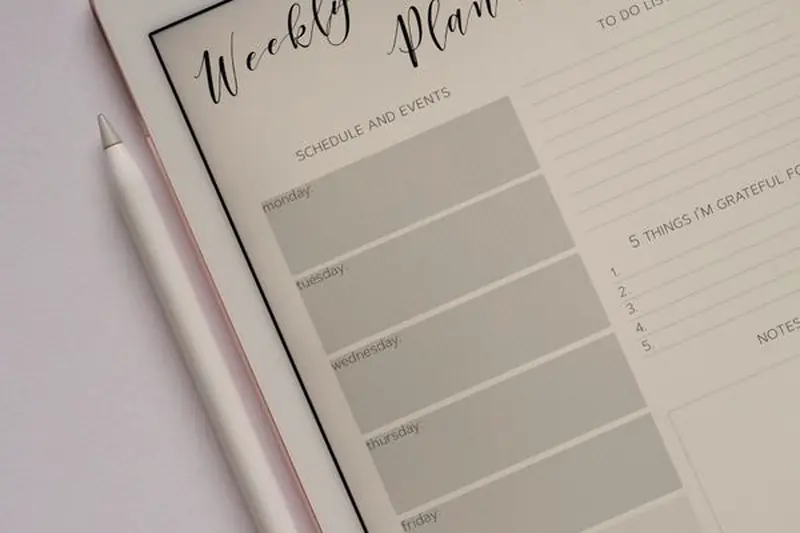
What it is. A designed PDF buyers print at home or use on a tablet: a budget planner, a habit tracker, a content planner for creators, a meal planner, a prayer or gratitude journal. Printables work because the value is the system, pre-built — the buyer is paying to not design twelve interlocking pages themselves. The strongest beginner versions serve a specific person: not "a planner," but "a biweekly-pay budget planner" or "a 30-day habit tracker for night-shift workers." Specificity is what separates a product from a free download.
The weekend build. Saturday morning (2 hours): outline the page list from the problem outward — for a budget planner, that might be a monthly overview, a bill tracker, a payday budget page, a spending log, a debt payoff tracker, and a weekly check-in, twelve pages total — and have your AI assistant critique the list for missing pages and draft any instructional text. Saturday afternoon (3 hours): build the pages in Canva's free tier, one master style — two fonts, one accent color, generous white space — duplicated across pages so the set feels designed rather than assembled. Sunday (2–3 hours): use it yourself. Fill in the planner with a real week of your own numbers, because this test finds every flaw: the box too small for real handwriting, the tracker missing the column you reached for, the instruction that made sense in your head and none on paper. Fix what the test exposes, export print-ready PDF, and write the listing. Total: about eight focused hours. Our digital products guide covers formats and platform mechanics in more depth.
Where it sells and what it costs. Etsy is the natural first home for printables (its shoppers arrive searching for exactly this), with Gumroad as the no-listing-fee alternative and TikTok Shop viable once you have content promoting it. Honest starter pricing: $7–$19 for a focused planner, toward the top only when the page count and a real system justify it. A useful sanity example: at $14 with roughly 10% total platform and processing costs, you keep about $12.60 a sale — so ten sales is about $126, a realistic good first month for a validated niche product, and a fantasy for an unvalidated one, which is why the launch note at the end of this guide matters.
Product 2: A niche template pack
What it is. A bundle of ready-to-use working files for one audience's recurring task: a content calendar plus caption templates for faceless creators, spreadsheet trackers for resellers, client onboarding templates for freelancers, lesson-planning templates for teachers. Templates sell the purest form of the digital-product promise — hours already spent, packaged — and they have a structural advantage: the buyer can judge the value before buying, from a screenshot of one template, far better than they can judge a planner or a book.
The weekend build. Saturday (3 hours): inventory the task. Write the ten to twenty moments your audience repeats — for the creator pack: planning a week of posts, writing a hook, scripting a 60-second video, logging performance, reviewing the month. Have AI draft first versions of each template's structure and wording, then rebuild every one inside the actual tool the buyer will use (Google Sheets, Notion, or Canva), because a template that lives in a screenshot is not a template. Sunday morning (2 hours): the formula pass — each template gets a filled-in example, since an empty template teaches nothing; your example is the difference between a file and a system. Sunday afternoon (2 hours): record or write the one-page quick-start that tells buyers the order to use the pack in, package the files, and prepare the listing with screenshots of three templates, not twelve — curiosity outperforms completeness in a listing gallery. Our 30-day faceless plan is itself a worked example of the kind of system a creator template pack should encode.
Where it sells and what it costs. Gumroad suits template packs well (files delivered cleanly, no listing fees, you keep the customer relationship), Etsy reaches buyers who search by task, and TikTok Shop works when your content demonstrates the template live. Honest starter pricing: $12–$29, the highest of the three products here, because a good pack replaces recurring hours rather than informing once. Price the outcome honestly: a pack that saves a creator two hours a week earns its $19 in the first fortnight; a pack that saves nothing is overpriced at $5.
Product 3: A short practical guide or ebook
What it is. A focused PDF — typically 15 to 25 pages, roughly 4,000 to 6,000 words — that solves one painful, specific problem completely: passing a certification's hardest section, setting up a first aquarium without killing the fish, the exact scripts for negotiating a rent increase. Narrow and deep beats broad and shallow at every price point; the buyer is purchasing the end of a specific frustration, not a survey of a topic.
The weekend build. Saturday morning (2 hours): the outline is the product — chapter it by the buyer's journey through the problem, in their order, not the subject's order. Use AI to pressure-test the outline: what question would a sufferer ask that this outline doesn't answer? Saturday afternoon and Sunday morning (4–5 hours): draft with AI assistance section by section, then do the work that makes it yours — rewrite in your voice, insert the real numbers, examples, mistakes, and screenshots from your own experience. An ebook's value concentrates in exactly the parts AI cannot generate: what actually happened when you did it. Sunday afternoon (2 hours): format simply (clean headings, one readable font, a table of contents), export to PDF, and have one honest reader — ideally someone with the problem — read it and mark every confusing page before you list it.
Where it sells and what it costs. Gumroad and your own site (the domain from our cost plans guide pays for itself here) are the standard first channels; Amazon KDP is a legitimate second step once a guide has proven itself elsewhere, with its own formatting and exclusivity considerations to read first. Honest starter pricing: $9–$27. The worked math, plainly: at $19 and a 10% platform fee, you keep $17.10 per sale before taxes — which means five sales a month is a nice dinner, fifty is a car payment, and the distance between those outcomes is audience and validation, never the weekend build itself.
The ethics line: where AI help ends and low-value begins
Every platform you will sell on is converging on the same position, stated in their various policies and enforced through refunds and reports: AI is a tool, not an author you can hide behind. The working rule is simple — if you would be embarrassed to describe exactly how the product was made, do not sell it. AI-assisted means the tool drafted, outlined, formatted, or critiqued, and a human with real knowledge then verified, corrected, personalized, and stood behind every page. AI-generated-and-unedited means a prompt went in and a product came out with no human judgment in between — and buyers can tell. They tell from the generic advice, the subtly wrong steps, the example that doesn't quite work. Those products get refunded, reported, and one-star reviewed with screenshots, and marketplaces increasingly require disclosure of AI involvement and act on low-value listings; check the current disclosure rules on each platform before listing, and disclose where asked, plainly.
Two further rules are absolute. Never sell PLR (private label rights) content or anyone else's work as your own — resold text is both an integrity failure and, usually, a license violation waiting for its first attentive buyer; our AI images and copyright guide covers the same principle for visuals. And stand behind the product: a working contact, honest refund terms, and real answers to buyer questions. The creators who build durable product income are not the ones with the fastest generation pipeline; they are the ones whose second product sells to the first product's buyers.
Launch the weekend after: validate before you scale
A finished product is not a launched one. Before building product number two, run the smallest validation from our validation guide: one piece of content teaching one slice of the product free, a listing page, and a close watch on whether strangers — not friends — buy, ask questions, and complete it. First buyers' questions are your version-2 outline, delivered free. Update the product, tell buyers the update is theirs at no charge, and only then widen the funnel. This loop, product by product, is how a weekend experiment becomes a catalog — and a catalog, unlike a single launch, is an income source.
Frequently asked questions
Which of the three should a total beginner make first?
The one closest to a problem you have personally solved. A planner you have used for three months, templates you run your own channel on, a guide to the thing friends already ask you about. Personal experience is your unfair advantage over pure AI output — and the raw material of the human pass that makes the product worth money.
Do I need an audience before building?
You need a way to reach buyers, which is not the same as a large audience. Marketplaces like Etsy supply search traffic for printables; a small channel supplies warm buyers for its own niche's templates. What fails is a product with no channel at all — validate with even ten stranger sign-ups before assuming sales.
How do I price if competitors charge less?
Compete on specificity and proof, not price: a narrower promise ("for night-shift workers"), a filled-in example, a screenshot of the system in use. Dropping from $14 to $6 halves your income per sale while attracting the most refund-prone buyers in the market. The race to the bottom has exactly one winner and it is never the seller.
What if my first product barely sells?
That is the normal outcome, and it is data, not verdict: weak listing clicks mean the promise or cover; clicks without sales mean price or proof; sales with refunds mean the product itself. Each diagnosis has a fix cheaper than a new product. Most durable catalogs are built by sellers whose first product was ordinary and whose response to that fact was diagnostic.